Devashish Jain – Intro
Introduction
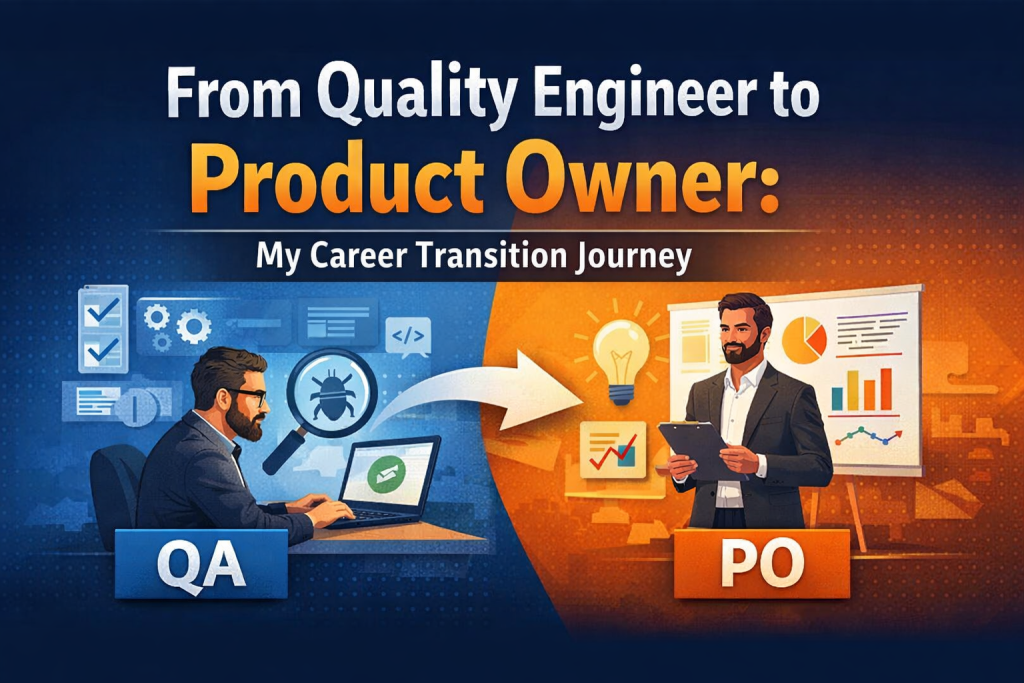
After spending more than a decade in Quality Engineering, I made a career move that many people asked me about — transitioning into a Product Owner role.
This was not an overnight decision, nor was it driven by titles alone. It came from years of working closely with products, business stakeholders, and customers, and realizing where I could create the most impact.
In this blog, I want to share:
- Why I decided to move from QE to PO
- How my QA background helped me
- What I learned during this transition
- Advice for QA professionals considering a similar path
My Background in Quality Engineering
I have spent 13+ years in Quality Engineering, with hands-on experience in:
- Mobile and web application testing
- API automation (REST & GraphQL)
- End-to-end delivery in the payments and financial domain
- Leading QA teams and owning quality for large-scale launches
Over the years, my role naturally evolved beyond testing:
- Participating in requirement discussions
- Identifying gaps in product understanding
- Collaborating closely with Product, Engineering, and Business teams
- Influencing product decisions through data and risk analysis
That exposure planted the first seed.
Why I Wanted to Become a Product Owner
The key reason was impact.
As a QE, I ensured quality after decisions were made. As a Product Owner, I could help shape the right decisions from the start.
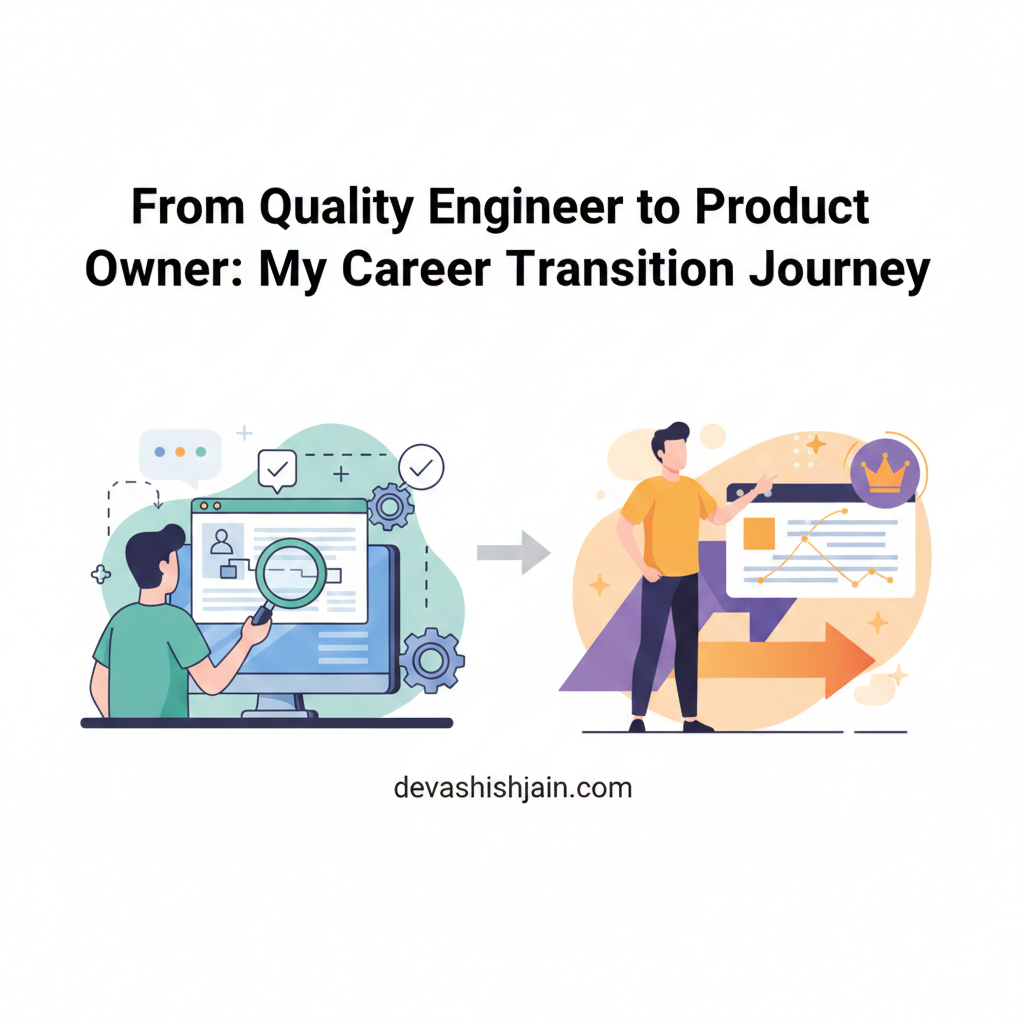
Here are the main factors that drove my transition:
1. Deep Product Understanding Was Missing
I noticed that many teams understood the product only at a high level.
With my QA background, I naturally went deep — edge cases, user journeys, compliance scenarios, and failure paths.
I felt I could bridge this gap better in a PO role.
2. Strong Alignment with PO Responsibilities
Without the title, I was already doing many PO-like activities:
- Reviewing and refining requirements
- Asking “why” behind features
- Identifying risks early
- Supporting prioritization discussions
- Ensuring end-to-end delivery
The transition felt like a formalization of what I was already practicing.
3. Long-Term Career Growth
I wanted to move closer to business outcomes, customer value, and strategy — not just execution.
How My QA Experience Helped Me as a Product Owner
Coming from QA is actually a huge advantage if used correctly.
Here’s how it helped me:
- User-centric thinking — QA trains you to think like the end user
- Risk-based prioritization — understanding what can break and what matters most
- Clear acceptance criteria — fewer ambiguities, fewer reworks
- Better collaboration with engineering — realistic timelines and expectations
- Quality by design, not by testing
Instead of seeing QA as a limitation, I treated it as my core strength.
Challenges I Faced During the Transition
The transition was rewarding, but not easy.
Some challenges I faced:
- Shifting mindset from finding defects to defining value
- Letting go of hands-on testing comfort
- Learning to say “no” based on priority, not feasibility
- Building confidence in business and stakeholder discussions
Each challenge pushed me to grow — both professionally and personally.
What I Did to Prepare for the PO Role
To prepare myself, I focused on:
- Understanding PO frameworks and processes
- Learning stakeholder management and prioritization techniques
- Improving communication and decision-making skills
- Getting certified (PMP, CSPO) to strengthen fundamentals
- Learning from real projects rather than theory alone
Most importantly, I applied PO thinking in my existing role before officially transitioning.
Advice for QA Professionals Aspiring to Become Product Owners
If you’re a QA professional considering this path, here’s my honest advice:
- Start thinking beyond test cases — think customer value
- Get involved in requirement and grooming discussions
- Learn how business decisions are made
- Build strong communication and storytelling skills
- Don’t wait for the title — practice the role
Your QA experience is not a disadvantage. It’s your differentiator.
Final Thoughts
My journey from Quality Engineer to Product Owner has been one of the most fulfilling phases of my career.
It allowed me to leverage my experience, expand my impact, and continue learning every day.
If you’re standing at a similar crossroads — know that the transition is possible, practical, and powerful when done with the right mindset.
Thanks for reading.
If this story resonates with you or you’re considering a similar transition, feel free to connect with me or leave a comment.
Comments